Search

Research Group

Microbial Biodegradation and Bioprospecting

The Microbial Biodegradation and Bioprospecting team is interested in investigating the biodegradation processes of organic environmental pollutants, with special emphasis in fluorinated compounds. With this objective, the team is focused in obtaining and characterising microbial consortia capable of efficiently degrading these compounds and in investigating the metabolic mechanisms responsible for the biodegradation processes, generating essential knowledge for the treatment of contaminated industrial effluents.

Another important focus of the team is the bioprospecting of marine actinobacteria for the discovery of novel bioactive compounds with pharmaceutical/industrial applications. The potential of actinobacteria for the production of bioactive metabolites is enormous and actinobacteria associated with Portuguese marine sources are highly unexplored. The team is thus keen in finding new antimicrobials, anticancer, anti-inflammatory and anti-obesity compounds, as well as new biosurfactants and other industrially relevant molecules. By searching for compounds relevant to the health and industrial sectors, the team seeks to translate biotechnological research into products with high added value and to contribute to the development of the blue economy.

Principal Investigator

imgs_olydu_ref.maria_de_fatima_carvalho1-1.jpg
Group Leader

Maria de Fátima Carvalho holds a degree in Microbiology and a PhD in Biotechnology from the Portuguese Catholic University. She is currently principal investigator at CIIMAR, where she leads the research team Microbial Biodegradation and Bioprospecting. Her research interests are focused on two main lines (i) development of biotechnological strategies for the removal of organic environmental pollutants, with special emphasis on fluorinated compounds and (ii) bioprospecting actinobacteria from diverse sources (from terrestrial to marine environments) for the discovery of novel molecules with relevant biotechnological applications.

RESEARCH GROUPS:

Research Projects

ACTINODEEPSEA

ATLANTIDA

Biological producers of Natural Fluorinated Compounds

BIOREM

BIOSYSMO

BLUEandGREEN

CORAL

INNOVMAR

MAR2PROTECT

MarinEye

NetTag

NETTAGPlus

Ocean3R

PBA

ROSM

SAFE

SpilLess

Group members

thumbnail
Ines Ribeiro_2 - Inês Filipa Coelho Ribeiro
Administrative Services
Biobank

Inês Ribeiro holds a BSc in Environmental Health (2015), an MSc in Toxicology and Environmental Contamination (2017), and a PhD in Biomedical Sciences (2023). Her work was in the field of marine biotechnology, focusing on the bioprospection of marine actinobacteria for the discovery of new natural products. Currently, she is a researcher (microbiology technician) in the CIIMAR, within the scope of the Innovation Pact, and provides technical support for maintaining and organizing cultures of non-photosynthetic prokaryotes that will integrate the Portuguese Blue Biobank. She has experience and know-how in microbial isolation and identification, carrying out bioactivity and biodegradation tests, and knowledge of the chemistry of natural compounds.

WhatsApp Image 2023-12-12 at 23.13.57
MSc Student

Sílvia Ferreira holds a BSc degree in Biomedical Sciences from the University Institute of Health Sciences – CESPU. She is currently completing her MSc degree in Biochemistry in Health and actively engaged in her master’s internship with the Microbial Biodegradation and Bioprospecting Research Group. In this research project, one of the aims is to investigate the taxonomic diversity of actinobacteria derived from R. graveolens.

RESEARCH GROUPS:
imgs_2bJmb3iMNXcOD_ref-1.jpg
PhD Student

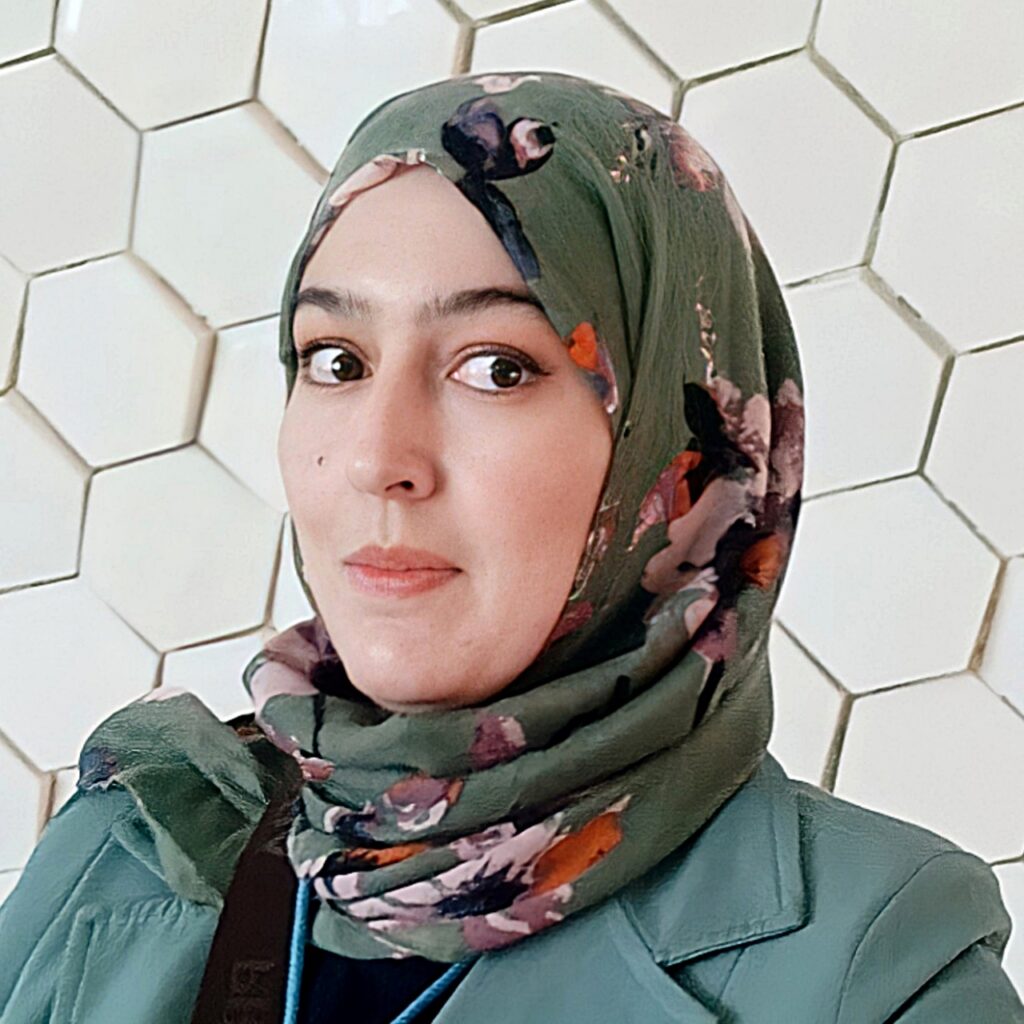
I am a PhD student, my research interest is focused on: 1.Saharan wild Leguminous species, their biotope and its influence on their symbiotic activity. 2.The characterisation of their symbiotic microorganisms and selecting the most effective microbial species to be investigated in sustainable biotechnological applications. 

I took my Bsc in Ecology and environment (2014) and Msc in Environmental sciences  (2016) from the university of Kasdi Merbah Ouargla, Algeria.

RESEARCH GROUPS:

Main publications

Actinobacteria from Artic and Atlantic deep-sea sediments-biodiversity and bioactive potential.

Ribeiro, I., Antunes, J.T., Alexandrino, D.A.M., Tomasino, M.P., Almeida, E,, Hilário, A., Urbatzka, R., Leão, P., Mucha, A.P., Carvalho, M.F.

2023Frontiers in Microbiology, 14, 862.
Revisiting pesticide pollution: The case of fluorinated pesticides.

Alexandrino, D.A., Almeida, C.M.R., Mucha, A.P., Carvalho, M.F.

2022Environmental Pollution, 292: 118315
Combining Culture-Dependent and Independent Approaches for the Optimization of Epoxiconazole and Fludioxonil-Degrading Bacterial Consortia.

Alexandrino, D.A., Mucha, A.P., Tomasino, M.P., Almeida, C.M.R., Carvalho, M.F

2021Microorganisms, 9: 2109
Atlas of the microbial degradation of fluorinated pesticides.

Alexandrino, D.A., Mucha, A.P., Almeida, C.M.R., Carvalho, M.F.

2021Critical Reviews in Biotechnology
Diversity and Bioactive Potential of Actinobacteria Isolated from a Coastal Marine Sediment in Northern Portugal.

Ribeiro, I., Girão, M., Alexandrino, D.A.M., Ribeiro, T., Santos, C., Pereira, F., Mucha, A.P., Urbatzka, R., Leão, P.N., Carvalho, M.F.

2020Microorganisms, 8: 1691
Microbial degradation of two highly persistent fluorinated fungicides - epoxiconazole and fludioxonil.

Alexandrino, D.A.M., Mucha, A.P., Almeida, C.M.R., Carvalho, M.F.

2020Journal of Hazardous Materials 394: 122545
Actinobacteria isolated from Laminaria ochroleuca: a source of new bioactive compounds.

Girão, M., Ribeiro, I., Ribeiro, T., Azevedo, I.C., Pereira, F., Urbatzka, R., Leão, P.N., Carvalho, M.F.

2019Frontiers in Microbiology.