Search

Research Group

Land-Ocean-Atmosphere Interactions

LOAI’s overarching aim is the comprehensive study of terrestrial, aquatic and atmospheric systems, as well as their interactions, using a holistic and multidisciplinary approach. LOAI further promotes the interaction with other research areas, providing know-how and cooperating in multidisciplinary research, and supports policy makers and stakeholders, with new data, models and tools towards a better management and decision making.

The team has a vast expertise in hydrology, oceanography, coastal and ocean dynamics, climate and atmosphere dynamics, and experience in advanced monitoring methodologies, remote sensing and GIS, as well as statistical and numerical modelling.

There are four core topics, each coordinated by a team member:

Atmosphere and climate dynamics (coordinated by Irina Gorodetskaya) – focuses on the atmospheric dynamics, water cycle and impacts on precipitation and surface energy balance, spanning from meteorological phenomena to climate change; a particular focus is on the drivers and impacts of extreme weather events, such as the atmospheric rivers; methodologies span in situ and remote sensing measurements, statistical analysis and regional climate modeling; the regions of focus are the Polar regions – Antarctica and Arctic – and Europe.

Coastal and ocean dynamics (coordinated by Clara Lázaro) – focuses on large- to small-scale oceanic, coastal and estuarine processes. Methods applied are the implementation and application of numerical hydrodynamic and biogeochemical models and the improvement and exploration of remote sensing data (satellite altimetry and multispectral imagery) to: characterise the deep sea, open-ocean, coastal and estuarine circulation; represent their interaction with the atmosphere, species and ecosystems; understand the variability and trends of the systems, and forecast the effects of anthropogenic intervention, extreme events and climate change, simultaneously assessing their risks and impacts.

Coastal monitoring and management (coordinated by José A. Gonçalves) – focuses on the observation and management of coastal systems, assessing: coastal and estuarine water conditions, including underwater noise; land and river/estuarine/ocean bottom morphodynamics; coastal erosion risk and management; land cover, habitat and species distribution. Methods used are mainly UAS remote sensing, with optical multispectral and thermal sensors.

Water resources systems (coordinated by Rodrigo Maia) – focusses on the study of water resources and their management; sediment transport and river hydraulics; hydrological and fluvial processes and their effects on communities and the environment; solutions to mitigate negative impacts and to restore river and estuarine water systems. Methods applied include hydrological and hydraulic modelling; study of extreme events (floods and droughts) and water scarcity; development and application of decision support tools for water resources management; evaluation of water policy and governance; new analytical and experimental technologies for sediment transport studies; and computational modelling of rivers and aquifers behaviour.


Principal Investigator

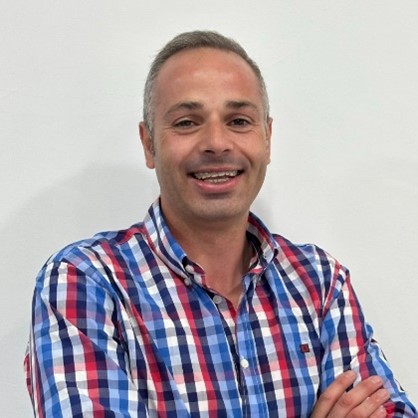
imgs_4rx4e_ref.ana_bio1-1.jpg
Group Leader

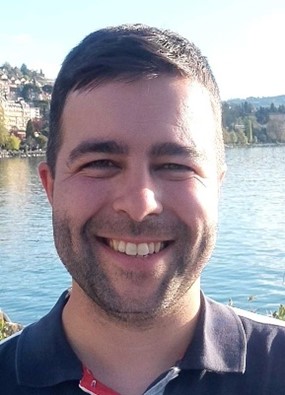
Ana Bio is a biologist, graduated at the University of Aveiro, who obtained her PhD at Utrecht University, the Netherlands, with a thesis on statistical species-environment modelling. Since then, her research interests evolved in the fields of species-environment relationships; estuarine and coastal ecosystems and erosion risk assessment; and underwater bioacoustics. Main activities include: coastal and ocean monitoring; empirical data analysis and statistical modelling; morphodynamics and risk assessment; remote sensing data analysis; and Geographical Information Systems (GIS).

RESEARCH GROUPS:
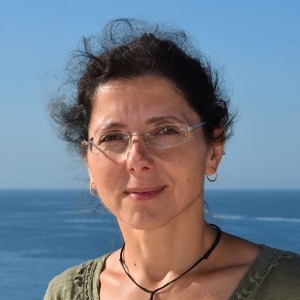
imgs_fncqp_ref.isabel_iglesias1-1.jpg
Researcher

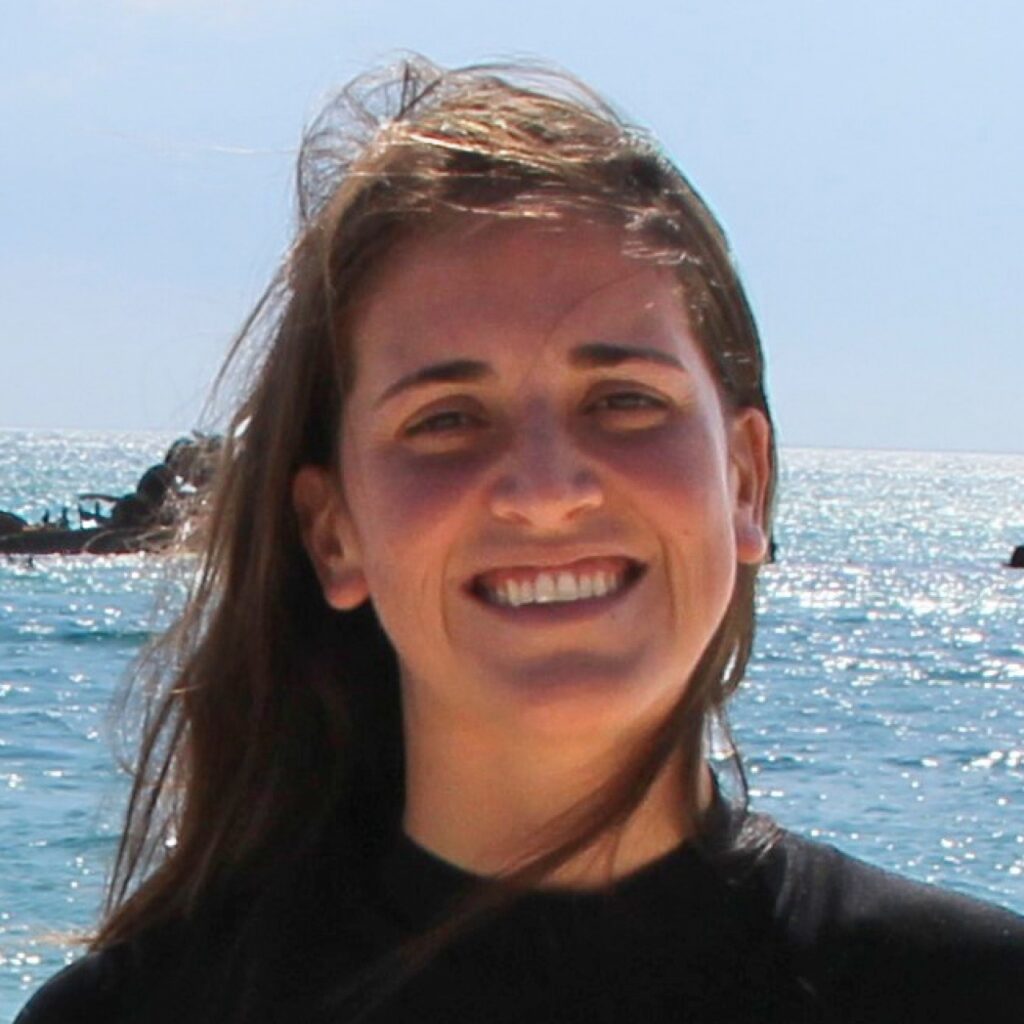
Isabel Iglesias is an Assistant Researcher and Co-PI of the LOAI research team of the CIIMAR. Isabel’s main scientific areas are physical oceanography, atmosphere-ocean interaction, marine litter, nature-based solutions, anthropogenic interventions impacts, deep-sea mining, extreme events, climatology and climate change. She works with numerical models applied to oceanic, coastal and estuarine regions to understand present and future hydrodynamic conditions, providing knowledge, technology and solutions for a sustainable management of natural resources and ecosystem services. She also has experience in planning, performing and analysing data from short- and long-term campaigns, and in the evaluation of remote sensing data.

RESEARCH GROUPS:
Research Projects

ATLANTIDA

BLUEFORESTING

DEEPRISK

EsCo Ensembles

MAELSTROM

MAGAL

MAPS

MarRISK

MICROANT

MIWAVES

MODELRISK

Ocean3R

SWUAV

Group members

imgs_uf471bgmr5Bhd_ref-1.jpg
Administrative Services

I obtained the master degree in Surveying Engineering at the Faculty of Sciences of the University of Porto. At the moment, I am enrolled in a Doctorate Degree in the same institution. My project title is “Mixing and transport of material at small ocean scales: a lagrangian approach”. My main interests are high frequency ocean phenomena, as internal waves that occur in the ocean and can have a strong impact in the Earth´s climate (due to vertical mixing). For that, I am using Satellite Remote Sensing tools as Radar Altimetry, Sea Surface Temperature, Ocean Colour, SAR imaging, and recently numerical models.

RESEARCH GROUPS:
Imagem5
Collaborator

António Pinto holds a PhD in Civil Engineering, by the Faculty of Engineering of the University of Porto (FEUP). He’s part of E.RIO’s multidisciplinary team, a company dedicated to river rehabilitation, and its mission is to implement bank stabilisation solutions using natural engineering techniques, from the design phase to its execution in the field. In parallel, he also works in engineering specialities design in buildings and infrastructures, having a history of more than 300 projects developed in different areas.

RESEARCH GROUPS:
Imagem7
Collaborator

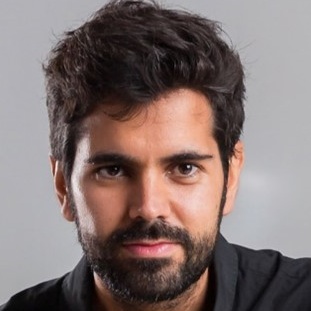
Bruno Oliveira is a PhD, former researcher at the Faculty of Engineering of the University of Porto (FEUP) and researcher at CIIMAR. His PhD thesis is in the subject of stochastic modelling of fluvial morphodynamics. As a design engineer, he has experience in the areas of water supply and drainage systems, river rehabilitation, flood modelling & control, coastal protection structures and project management in general. Throughout his academic career, he has worked on multiple projects pertaining to climate change and its impacts on water resources’ availability and water management (from both a perspective of resource conservancy and of flood management).

RESEARCH GROUPS:
Imagem2
Collaborator

Jorge Cardoso Gonçalves holds a Ph.D. in Civil Engineering – Hydraulics, Water Resources, and Environment from the Faculty of Engineering at the University of Porto, where he also completed his Bachelor’s and Master’s degrees. He has received training in Management from Porto Business School and has attended Advanced Programs in Water Services Management (LNEC/LIS-Water) and Waste Management (FEFAL). As an author and co-author of various works in the field of Hydraulics, he serves as a designer, researcher, operational manager, and engineering consultant. He is a co-founder and partner of the company Water Services Consulting and Management, Lda, and he is also the President of the Portuguese Association of Water Resources (APRH).

RESEARCH GROUPS:
thumbnail
thumbnail
imgs_7TisZw2A2haMH_ref-1.jpg
Research Grant

Vanessa holds a MSc degree in environmental engineering. She is currently finishing her PhD in environmental engineering at FEUP, which has been developed in close collaboration with the EDP-Produção. Throughout her career, she worked on as researcher in several national/international projects, related with the effects of extreme events and climate change in water resources management and freshwater ecosystems. Currently, her main research interests focus on: i) integrated hydrological modelling, ii) environmental flows effects on the ecological condition of surface water bodies, and, iii) extreme events and climate change effects on water resources management.

RESEARCH GROUPS:

Main publications

Kinematic Galileo and GPS Performances in Aerial, Terrestrial, and Maritime Environments.

Bastos, L., Buist, P., Cefalo, R., Goncalves, J. A., Ivan, A., Magalhaes, A., Pandele, A., et al.

2022Remote Sensing, 14(14), 3414
Combining Low-Cost Sonar and High-Precision Global Navigation Satellite System for Shallow Water Bathymetry.

Bio, A., Gonçalves, J.A., Magalhães, A., Pinheiro, J., Bastos, L.

2022Estuaries and Coasts, 45 (4), pp. 1000-1011
On the role of the troposphere in satellite altimetry.

Fernandes, M. J., Lázaro, C., & Vieira, T.

2021Remote Sensing of Environment, 252, 112149
Short timescale variability in large-amplitude internal waves on the western Portuguese shelf.

Magalhaes, J.M., Silva, J.C.B., Nolasco, R., Dubert, J., Oliveira, P.B.

2022Continental Shelf Research, 246, 104812
Evaluating Uncertainty and Modes of Variability for Antarctic Atmospheric Rivers.

Shields, C. A., Wille, J. D., Marquardt Collow, A. B., Maclennan, M., Gorodetskaya, I. V.

2022Geophysical Research Letters, 49(1628)
Improving estuarine hydrodynamic forecasts through numerical model ensembles.

Iglesias, I., Pinho, J.L., Avilez-Valente, P., Melo, W., Bio, A., Gomes, A., Vieira, J.M., Bastos, L., Veloso-Gomes, F.

2022Frontiers in Marine Science, 9, 812255